Tuesday, September 23, 2014

April Showers - A Lullaby

This morning the Earworm gave me two songs.

"April Showers" and the French national anthem "La Marsiellaise".

I think I will focus on the first.

"April Showers". Written by Louis Silver and B. G. DeSylva it was introduced in a 1921 Broadway show called "Bombo" and featured "Jollie" himself, Al Jolson, surly one of the most electrifying acts ever to tread the boards.

He was born Asa Yoelson in Snrednicke, Lithuania in 1885 (once again that incredible connection between the Eastern European Jew and American music) and died in this country in 1950 after completing an exhausting tour of Korea, entertaining the troops, something he insisted on doing through two wars.
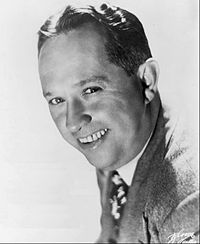
"Jollie" without blackface.

I like Al Jolson. In spite of the "black-face" he worked in. With white gloves and highlighted eyes and mouth, Jolson became, for his time, the Elvis of the music industry.

Don't get me wrong. Working in "black-face" nowadays would be considered racist, rude, and ridiculous. But Jolson didn't have a prejudicial bone in his body. Frankly, he was too busy promoting himself and his act to be bothered with hating anybody. He had a phenomenal ego and was always pushing his way to the front. But racially biased? Never.

And the Elvis part? Several sources, including the tome "The American Songbook" by Ken Bloom (published in 2005 by Blackdog and Levanthal) states that he was connection between jazz, ragtime and the popular "square" ballads at the turn of the last century, Like Elvis and Irving Berlin he made black music palatable to the white audience.

He sold that song and wrung out your heart at the same time. Catch him on Youtube. Even the more recent stuff shows the power he had with an audience.

The critic Robert Benchley said that ".... the word personality isn't strong enough for what Jolson has. And unimpressive as the comparison may be, the only one in history to equal his power was John The Baptist."

Wow. Elvis and JtB all in one piece'

But back to "April Showers" as a lullaby.  Ask Rose and my children.

Fifteen or twenty years ago, my kids requested lullaby's from me or my wife as we tucked them into bed after a long day of school or play and we would oblige.

Rose would sing those songs her own parents would sing to her. Songs like "Playmate, Come Out And Play With Me" or perhaps from the James Taylor songbook - "Sweet Baby James"....."The first of December was covered with snow and so was the turnpike from Stockbridge to Boston." You know the rest.

My parents, a generation before hers, had such ditties as "Mairsy Doats", "Sue City Sue" and others including the post title, "April Showers". The song contained in its lyrics what many call the "bluebird effect". A song with bluebirds mentioned was popular. Like:
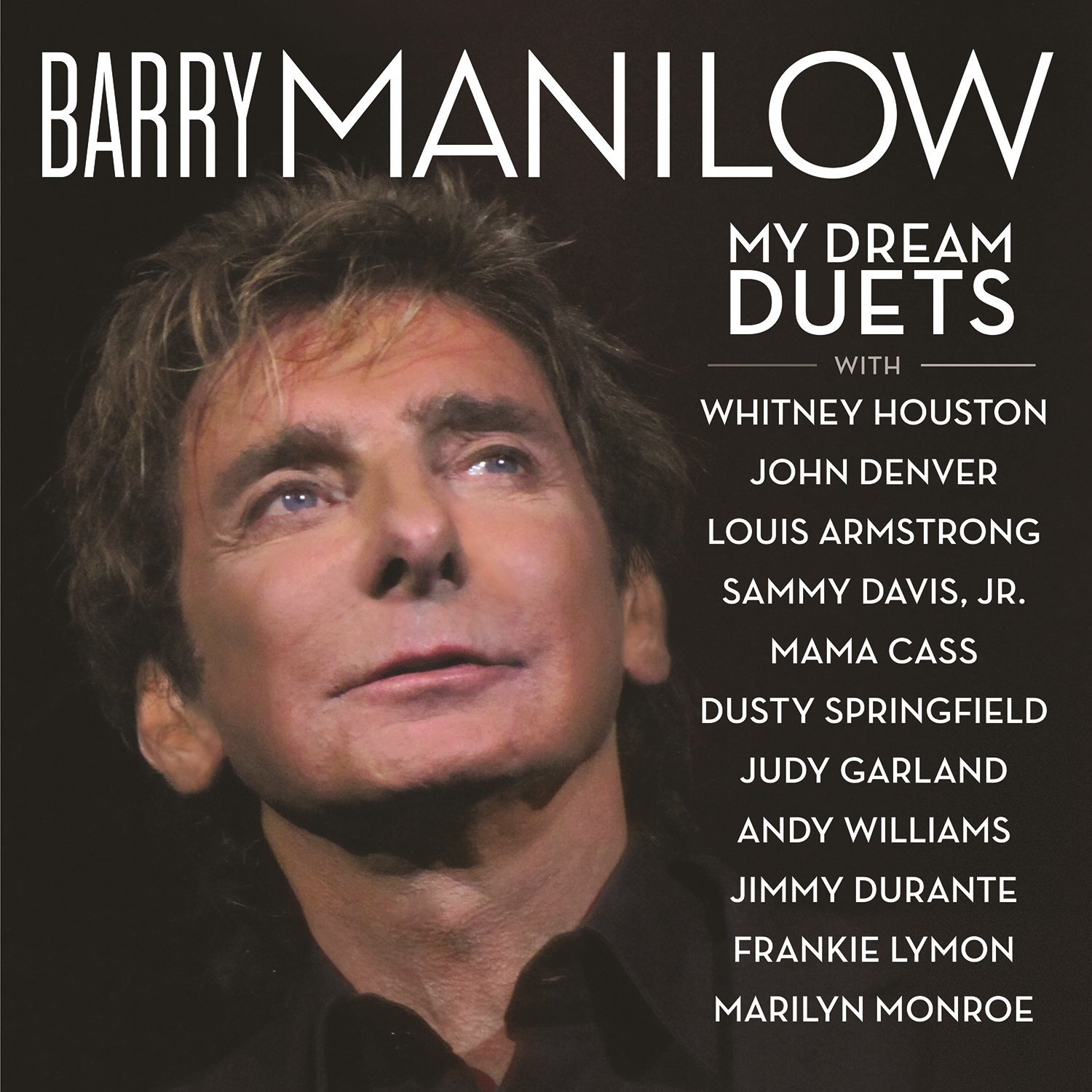
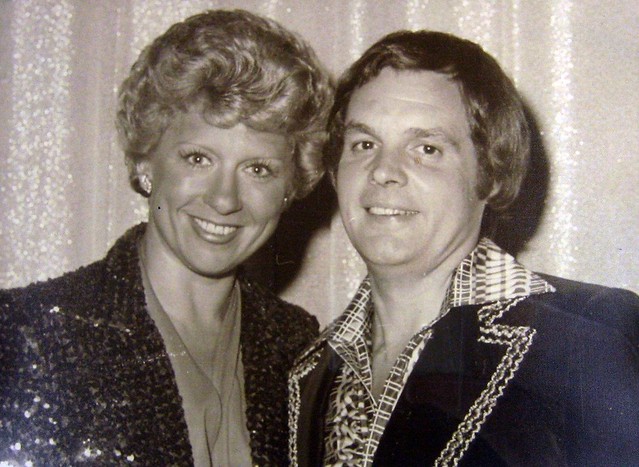
Barry's lastest CD.
"So keep on looking for a bluebird and listening for a song whenever April showers comes along." - "April Showers". Or:

"If happy little bluebirds fly beyond the rainbow why oh why can't I" - "Over the Rainbow".

So I would sing songs to them as I did to the kids from my first marriage. In their case, sometimes they would carry transistor radios to bed and listen to a story-telling over the air from a show I did in the evening over the local station WEMJ in Laconia NH in the 1970's.

Some other songs I would sing as lullaby's?

Pat Boone's "April Love", The song "Buffalo Gals" from the perennial Christmas classic "It's A Wonderful Life", Jimmy Driftwood's - "Tennessee Stud" and Barry Manilow's "Copacabana".
By the way. Have you heard Barry's surprise album for Halloween? Its a cd filled with duets he does with only dead people. Yep.

More from the Earworm tomorrow.


Monday, September 22, 2014

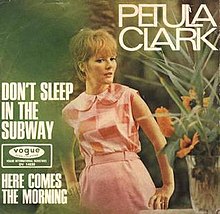
Don't Sleep In The Subway - Petula Clark

I always thought this song sprang full blown from the Broadway musical "Subways Are For Sleeping", but alas, I was wrong........again.

The Earworm placed this song in my head and, in turn, it brought forth a flowery chum-bucket of memories.

This was written by Tony Hatch and Jackie Trent to be recorded by Petula Clark and released in April of 1967 on Pye Records in GB.
Jackie Trent and Tony Hatch

Hatch and Trent were a songwriting team from Great Britain who arrived a bit before and then rode the crest of the "First British Invasion".

Hatch made a name for himself as a writer, arranger, producer and keyboardist for many well known performers including Clark, The Searchers, Bobby Rydell, Chubby Checker, Connie Francis, Pat Boone and many others. He also wrote under several names during this time including Mark Anthony and Fred Nightingale.

The song, length just under three minutes, contains a textbook of musical styles from pop, to classical and symphonic. The chord progression, and I strummed it with the guitar to see if it was true, (it was) is based on the familiar baroque piece "Pachelbels Cannon.

The chorus employs a Beach Boy type melody and then breaks into a symphonic series of  wails to be followed with Pets' lovely intonations.

According to the songs co-writer Trent, the title lyric was suggested by the 1961-62 Broadway musical "Subways Are For Sleeping", with book by Betty Comden and Adolph Green (who provided the book and screenplay from that timeless movie, "Singin' In The Rain") and music by the ubiquitous Julie Styne. (I knew we'd get a Golden Age American Songbook reference in here some how.)

In his book "American Popular Songs", Alec Wilder states one of his favorite Styne songs is "Time After Time" from a forgettable 1947 movie "It Happened in Brooklyn."

The lyrics tell the story of someone advising her sweetheart against storming out after an argument built on "silly pride" and asks him to comeback. "Don't sleep in the subway, darling. Don't stand in the pouring rain."...are words of advice we should all heed.

Petula Clark always stymied me. Who was she?  A "bird" (the English slang word of the day for "girl")? Not really. She always appeared a bit older then George Harrison, Gerry Marsden, David Bowie or Mick Jagger. Yet, with her short skirt and knee length white vinyl go-go  boots, was always lumped together with that gang from Great Britain that liberated our record players for so many years and became known as "The First Lady" of the British Invasion.
Petula advising us not to sleep in the tube.

Her lineage with the English public went back at least twenty years when she was an entertainer with the BBC during World War 2. She was so popular a comic strip was created featuring her. She later went on to record many records in French as well as English having success with such songs as "Baby Lover", "The Little Shoemaker" and "Prends Mon Coer".

During the 1960's her popularity exploded worldwide with such upbeat hits as "Downtown", I Know a Place". "My Love" and "A Sign of the Times", and she has sold more then 68 million records in her career.

She appeared in many movies, my favorite being Sharon in the last movie Fred Astaire ever made, the Hollywood version of "Finians Rainbow"

She will always look and sound like a million bucks in my minds ear and eye.

More from the Earworm tomorrow.


Sunday, September 21, 2014

Heartaches and Slovenia

I could make up an elaborate story of how I woke up this morning with Ted Weem's version of "Heart Aches" on my mind. But I think the "earworm" must take Sundays off because I didn't. In fact, most unusual, I got nothing except an extreme craving for several cups of black coffee.

 Al Hoffman
And so I go with a song and arrangement of a tune that is one of the catchiest, swinging-est, ditties I have ever heard. Also, I have a chance to review a recent cd given to me one afternoon several weeks back while I was shmoozing with David Colburn (owner and possessor of a plethora of stringed instruments) and Ben Lamper, a sweet guy and a heck of a guitar mechanic (and player).

The tune first.

"Heartaches" was first published in 1931 music by Al Hoffman and lyrics by John Klenner. Hoffman was born in Minsk, Russia in 1902 (there's that Russian connection from yesterdays blog again!) with lyrics by John Klenner. It's should be noted here that Hoffman was a veritable stew pot of melodys, giving us such numbers as "Bibbidi-Bobbidi-Bo" (with Jerry Livingston and from Disneys ubiquitous "Cinderella") and the same bubbling wordy "Mairzy Doats" which in the 1940's became such a popular song that The New York Times and Newsweek commented on its success .

There were other, very pretty songs that fell from his pen such as "Allegheny Moon", "I  Apologize" (Billy Ekstein),  "Fit As A Fiddle" (remember Gene Kelly and Donald O'Connor soft-shoeing across the stage with duel fiddles in "Singing in the Rain."?) "A Dream Is A Wish Your Heat Makes", ("Cinderella" again with Livingston for Disney) and so many more.  "If I Knew You Were Comin' I'd a Baked a Cake."? Yep. That one also.


But the Ted Weems Orchestra cut the first recording in 1933 for Bluebird Records using everything in the bands arrangement book to sell this song with its infectious latin beat and shuffling rhythm. First, there is a guitar inspired opening doo-wacka-do followed by trumpets in time and reeds happily skipping after in the next line. Then comes what I think is a washboard and finally, the piece that really sells this song for me, whistling by Elmo Tanner.

Tanner, billed as the "Whistling Toubador" used his throat muscles, much like Bing Crosby, when he  warbled and it is just the bees knees!

Elmo himself!
But the song really never went anywhere until about fourteen years later when a disc jockey by the name of Kert Webster from 50,000 watt clear channel WBT in Charlotte NC began featuring it on a show at night called "Midnight Dancing Party".

It soon was being requested all across the country and Weems, who had dissolved the band in 1942 when the boys went off to fight and Pitrello had just about killed the recording industry, regrouped for a few years to take advantage of his new found fame.

This song is one of the happiest tunes I can think of and when it's playing, I just can't go to sleep.

Now the cd.

Listening to "Guitar Tales", an all guitar instrumental cd by Slovenian/American musician Sasho Zver made me want to do two things I always feel like doing after I listen to a guitarist who possesses consummate skill and joy like Sasho. Either bust my own guitar ala Peter Townshend (The Who) into a million pieces or apply to Berklee College of Music in Boston.

Which, oddly enough, is where Sasho graduated a few years back.

He has performed all over the world for many years in places like the UK, Germany and Austria, Belgium, Italy etc. beginning when he was nine and continuing non-stop since.

I had a chance to meet him briefly and was charmed by his honesty and humbleness and my admiration increased when I listened to this cd.

The first cut, "Heat In Nashville" pays homage to that place where (as John Sebastian sang) those "Nashville Cats" gather. It's pretty and follows the finger-pick styling of Chet Atkins.

Incidentally, Sasho traveled in 2007 to Nashville to perform at the "Chet Atkins Appreciation Society" convention.  That is a heavy thing to add to your biography!
Sasho Zver and guitar..... kneeling.


"Come on Foot" and "Mark's Suite" follows in a solid manner with "Eternity" floating ethereally above my computer. "Mojca" is endearing and lovely as is "More Love" (any royalties from this composition will go to "Raising the Blues" a non-profit dedicated to bring music to children undergoing medical treatment, therapy, and children with emotional, physical and educational disabilities. Go on line to find out more about this.)

"Highland Aire" brings forth the tang of heather in the glenns with its Celtic probing. All the songs feel right and are cleanly brought to life by this master musician along with some help by friend Peter Huttlinger.

My favorite? "Play that Rag". I've always been a sucker for ragtime!

Thumbs way up for this cd. "Guitar Tales" by guitarist Sasho Zver!

More tomorrow!


Saturday, September 20, 2014

Down Yonder and Tsarist Russia

I never thought I would find any connection between a popular American song, and the Czar of all the Russia's. But perhaps I am too naive because I find that there are least three composers of the American songbook, and God knows there are probably a lot more, who were born in Russian lands and raised in Tin Pan Alley.

George and Ira
Gershwin
Todays song-in-my-head is "Down Yonder", or perhaps better known as, "Waiting for the Robert E. Lee". with melody by Lewis Muir and L. Wolfe Gilbert, born in 1886 in Odessa in what is now known as Ukraine  but back in the day was part of the vast Russian Empire.

Irving Berlin was born a few years after Gilbert in 1888 in Tyumen Russia.  His original name was Israil Isidore Belin and he along with Gilbert was among the many Jewish immigrants at the begining of the last century who wrote what would become nation defining music.

This mighty amalgamation of American music also includes another who left Russian Jewish footprints in the duel genius of the Gershwin brothers, George and Ira, who's grandfather, Jakob Gershovitz,  was a mechanic for Czar Nicholas' Army, thus earning him the right of free travel as a Jew in this increasingly growing intolerant country.

Jakob retired to St. Petersburg and it was there his son, Moishe, who worked as a leather cutter fell in love with 19 year old Rosa Ruskina and they immigrated to New York in the late 1800's where they were later married, giving us two sons who in turn gave us some of the best songs ever written.

"Down Yonder" was used and recorded by Al Jolson, the great black-faced performer who, while performing as a racially infused and stereotypical African American,  brought sound to the movies in 1929 in "The Jazz Singer" and, down on one knee, carried this song along with him.

The words were composed while Gilbert watched stevedores unloading a steamboat on the Mississippi and brought it to Muir who added the tune.

Gilbert later wrote words to "Ramona" and "The Peanut Vendor."

"Down Yonder" was recorded by many folks over the years, including Judy Garland, Louis Jordan, Dean Martin and two guys known as Chas and Dave ,an English pop rock duo who created a musical style known as "rockney" which mixes pub singalong, Boogie Woogie, pre-Beatles rock and roll and humor.  They are quite well kown and opened for "Led Zeppelin" in 1979.

Who knew?

Here are the words:

L. Wolfe and the sheet music to "Down Yonder"

Railroad train, railroad train, hurry some more;
Put a little steam on just like never before.
Hustle on, bustle on, I've got the blues,
Yearning for my Swanee shore.
Brother if you only knew, you'd want to hurry up, too.

(Refrain:)
Down yonder, someone beckons to me,
Down yonder, someone reckons on me.
I seem to see a race in memory
Between the Natchez and the Robert E. Lee.
Swanee shore, I miss you more and more;
Ev'ryday, my mammy land, you're simply grand
Down yonder, when the folks get the news,
Don't wonder at the hullabaloo.
There's Daddy and Mammy, there's Ephram and Sammy,
Waitin' down yonder for me.


Summer night, fields of white, bright cotton moon ?

My, but I feel glad I'm gonna see you all soon!
'Lasses cakes mammy bakes, I taste them now.
I'll see my sweetie once more,
There's lots of kissing in store ..


American popular music owe much of its hubris; it's value as a national treasure, to the many men and women newly planted on this shore, either of their own volition or, sadly, those brought over here in chains.

Through them, a rough seed was planted. A seed that contained hard work and perseverance and a fierce determination  that would pull them up by their bootstraps and see them through. To many it was true, such as Gilbert, Berlin and the Gershwin's.

Someday soon I will devote a blog or two to the eastern European Jew and his vast contribution to The Great American Songbook.

I looked on YouTube to find a good representation this song and I almost immediately unr this gem. I don't know the names of these three gentlemen. Couldn't find them any where. But their fingers should be cast in gold!
There isn't any vocalizing on this - what I consider one of the finest versions of this song I've ever heard.


Friday, September 19, 2014

One Song - Many Paths

Russ. You always look good with a tux.
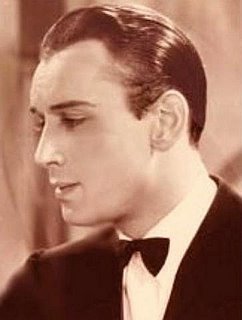
Today the song I found perched in my brain was "Prisoner of Love", a powerful ballad written by Russ Columbo and Clarence Gaskill with lyrics by Leo Robin, who wrote the words to several hits, including "Love In Bloom" (remember Jack Benny and his fading violin?) and "Louise" for Maurice Chevalier. Ah, I can see him now, strolling down the Rue de la Paix with his straw hat and cane...lower lip bulging....Awww-haw-haw my cheri! But , I digress.
When I first heard the song this morning, the name Russ Columbo (Born Euginio Ruggerio Rudolpho Columbo in the early part of the last century) came to mind, for it was he who first made a major recording of this very emotional number. Well, he was part composer. I'm not sure which part.
He was one of the first musicians (he was a whiz bang violinist as well as snappy baritone) to realize the intimacy of the newer microphones like the ribbon and condenser developed in the late 20's and 30's. It was he along with Bing Crosby who recognized how personal a song could get and the other crooners soon fell in line.
However, his career was cut short by fate a little over eighty years ago, on September 2, 1934  when Columbo and a photographer friend, Lansing Brown Jr. were fooling around with a pair of antique dueling postols in Browns apartment. When he (Brown) lit one and it went off the bullet ricocheting and hitting him in the heard. He died awhile later. Who knows how far he could have come. He might have easily rivaled "Der Bingle" for he was, shall we say, a bit more handsome then Harry Lilias.
Nevertheless, Bing admired him and learned the art of hugging the microphone and slowly making love to it,
I like Russ's version of the song along with a do-over a few years later in 1946 by Perry Como, the "Singing Barber". Como's approach to singing was as laid back as you can get without falling asleep at the mic. However his version is one of the few songs that makes the hair stand up on my head, no pun implied. He really injected it with a little passion, especially towards the end.
But the song does not stop in your grandparents time. Oh no my friends.
In 1957 "The Platters" did a version which rose into the the top 100 on the charts. It wasn't as big a hit as "The Great Pretender" or "Smoke Gets in Your Eyes" but tenor Wayne Miller put his own spin on this ageless song.
Did I say "soul" earlier?
Well it don't get more soulful then James Browns version.
Yes, if you remember back in the 60's "The Hardest Working Man in Show Business" busted his chops on this ageless melody.
So as I follow the tunes I arise with each morning, I find I am rowing a boat in a deep and endless sea of memories and information.
So long till tomorrow.


Thursday, September 18, 2014

Hindustan and Beyond

Back in the day any mention of India and the far east always elicited to many folks romantic visions of exotic beauties in saris, sitar music, chutney, incense and saffron. And many composers struck out to corral songs they felt would appeal to western audiences.
Such was the song "Hindustan", the tune I awoke with this morning.
It was published in 1918 and written by Oliver Wallace (words) and Harold Weeks (music). It became an immediate hit after it was recorded by the Joseph C. Smith Orchestra, a society band that played the Plaza Hotel in New York and went on to a modicum of fame.
The tune was usually played as an instrumental, but if you want the words, here you go:

Camel trappings jingle, harp strings tingle
With a sweet voice mingle underneath the stars
Singing memories are bringing
Temple bell are ringing, calling me afar'

Hindustan, my Hindustand, where we stopped to rest our tired caravan
Hindustan, my Hindustan, where the painted peacock proudly spreads his fan
Hindustan, my Hindustan, where the purple sunbird flashed across the sand
Hindustan, my Hindustan, where I met her and world began

Shades of night are falling, nigtingales are calling
Every heart enthrolling, underneath the stars
Sighing, like the night wind dying
Spft my heart is crying for my love afar

Hindustan, my Hindustan............(repeat above)

Several good swing tunes uses the "Indian theme" and found success with "Song of India", based on a melody written by classical composer Rimsky-Korsakov from his opera "Sadoka" and was arranged for Dorseys band by Tommy and Red Bone. It features that smooth trombone of Dorsey accentuated by his use of a straight mute.
"On the Road to Mandaly" is based on the poem by the great "jingoistic" Rudyard Kipling from his book of poems published in 1896, "Back Room Ballads and Other Verses" and it includes the famous pean to a water boy "beastie" "Gunga Din".
Music was added in 1907 by Oley Speaks.
This particular song is a groaner and has been a staple of leather chested baritones for years, including Nelson Eddy. Until Frank Sinatra got a hold of it, with arrangement by Billy May and included it in his "Come Fly With Me" album on Capitol back in 1958.
Sinatra received some criticism for changing Kiplings words, but to me, this song really kicks out the jams,
Heres the lyrics:


By the old Moulmein Pagoda
Looking eastward to the sea
There's a Burma broad a settin'
And I know she thinks for me
For the wind is in the palm trees
And the temple bells they say
Come you back, you British soldier
Come you back to Mandalay
Where the old flotilla lay
Can't you hear their paddles chonkin'
From Rangoon to Mandalay
On the road to Mandalay
Where the flyin' fishes play
And the dawn comes up like thunder
Out of China 'cross the bay
Ship me somewhere east of Suez
Where the best is like the worst
Where there ain't no Ten Commandments
And a cat can raise a thirst
'Cause those crazy bells are callin'
And it's there that I would be
By the old Moulmein Pagoda
Looking lazy at the sea
Come you back to Mandalay
Where the old flotilla lay
Can't you hear their paddles chonkin'
From Rangoon to Mandalay
On the road to Mandalay
Where the flyin' fishes play
And the dawn comes up like thunder


And then the songs just ends....with a massive gong stroke.


Wednesday, September 17, 2014

Maggie and God: Never Alone

Yesterday morn I awoke with a tune published in 1927 bellowing in my brain. Honestly, I don't understand where these things come from! It was, what they called back then, a "novelty" number entitled "I Never See Maggie Alone". Written by Everett Lynton and Harry Tilsley, it tells the story of a frustrated suitor who never seems to find time alone with his girl (the aforementioned Maggie) to pitch a little woo
The lyrics find her father, her mother, her sister and her brother everywhere, from a dimly lit living room to the end of a fishing line to even under the hood of this poor shnooks car!
The song was a big hit with the flapper set and was recorded over the years by folks as diverse as Slim Whitman to Ray Charles. This particular version I found on Youtube features a yodeling Kenny Roberts. It's a little piercing but you get the idea.
And here are the words:
I've got a special problem with my girlfriend Maggie,
Privacy is very hard to get.
I've tried and tried to find some way to get her all alone,
But nothing that I've tried to do has quite succeeded? Yet!

She brings her father, her mother, her sister and her brother.
Oh, I never see Maggie alone.
She brings her uncles and cousins, she's got 'em by the dozens.
I never see Maggie alone.
And if I phone her and say to her "Sweet,
Where shall we meet, supposing that we eat?"
She brings her father, her mother, her sister and her brother
Oh, I never see Maggie alone.

Maggie dear just won't go out alone.
Seems that she must have a chaperone.
When we go out, wherever we are bound,
There is always somebody around.

She brings her father, her mother, her sister and her brother.
Oh, I never see Maggie alone.
One night while we were out walking and she got tired of talking,
She invited me up to her home.
I turned the lights down, 'cause they were too bright.
Oh what a night, when I turned on the light,
There was her father, her mother, her sister and her brother
Oh, I never see Maggie alone.

Maggie dear is very sweet to me,
When she's near I'm happy as can be,
I long to say, "I want you for my own,"
But I never can see her alone.

I bought a roadster, two-seated, I even had it heated,
So that I could see Maggie alone.
While we were driving and kissing, the engine started missing,
And we were a long way from home.
I jumped right out then as fast as I could.
Found what was wrong, for when I raised the hood? (Guess who!)
There was her father, her mother, her sister and her brother
Oh, I never see Maggie alone.
I never see Maggie alone.

From the ridiculous to the sublime, this a.m. I heard a hymn as I staggered into the bathroom but could not remember the title. As I usually do in these circumstances, I wandered around the house for several long minutes humming the song over and over. No words, mind you. Just the tune.
So I ended up doing what I usually do when I can't remember a song.
I asked my wife, who, after a few minutes hesitation said - "Oh God Of Loveliness".
Bingo! and here it is as done by a fabulous choir from St. Teresas Parish from St. Johns Newfoundland.
So my morning "name that tune" went from the ridiculous to the sublime. I must admit I do find the first song rather catchy. Maybe I'll try to learn it.